
A Checklist to Improve Your Online Brand Visibility
From building a brand style guide to managing customer reviews, this checklist gives you a clear path to a stronger, more credible online presence.


- Create a comprehensive brand style guide covering logo, typography, tone, and imagery for all content
- Treat your style guide as a living document and review it quarterly or before major campaigns
- Use a content calendar with separate editorial, blog, and marketing tabs to plan your online presence
- Register alternative domain variations early to protect your brand from squatters
- Consistent brand voice across all platforms is a cornerstone of effective reputation management
Building a strong online brand requires consistent effort across brand guidelines, content strategy, and reputation management. This checklist walks you through the key steps — from creating a brand style guide to planning a content calendar and protecting your domain — to improve your brand's visibility and credibility online. Having a centralized style guide makes every other step easier by ensuring consistent messaging across all channels.
Building a strong online brand requires consistent effort across your website, social media, content strategy, and reputation management. This checklist covers the key areas to focus on — from creating brand guidelines to managing customer reviews — so you can improve your brand’s visibility and credibility online.
Brand Guidelines: The Foundation of Online Visibility
To improve your online brand, start with your brand guidelines (style guide). All communications stem from the rules and guidelines found in your style guide. Once you have this, the rest becomes easier because you can copy and paste most brand-related assets from the style guide.
What are brand guidelines?
Brand guidelines define the visual design, formatting, and style of a business’s brand for both online and offline use. They typically include logo style, formatting, and usage rules for the company blog, website, ads, and other marketing materials. Brand guidelines ensure continuity between departments, vendors, and over time.
What is included in brand guidelines?
- Logo variations in black and white as well as color
- Typography
- Ad layouts for on and offline use
- Tagline or taglines
- Website layout
- Approved imagery and rules of use
- Content guidelines like tone and voice
Action: Create a comprehensive brand style guide and use it for all content
Work with an in-house or external expert to draw up a detailed brand style guide that governs all written and visual content on web properties that you control or influence:
- Your website and blog
- Your social media profiles
- External communications, such as press releases
- Affiliate and partner content, such as sponsored reviews and product listings
- Advertising and marketing content
Your style guide ensures that everyone over whom you have any influence discusses your brand in the same terms — driving a consistent message to as wide an audience as possible. A consistent brand voice is also a cornerstone of effective reputation management.
If you are looking for freelancers, we recommend you start here: Toptal
Examples of strong brand style guides
Here are some inspirational resources for style guides. These are all for larger organizations, but look beyond the sizzle to see the meat of each guide:
Content Calendar: Planning Your Brand’s Online Presence
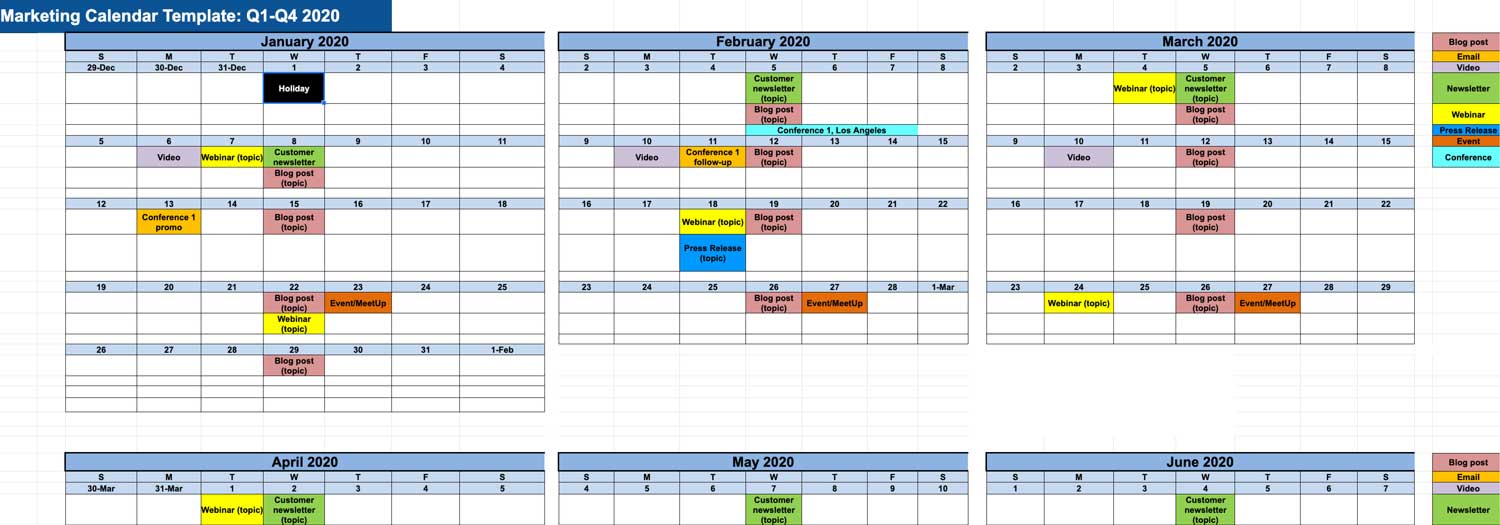
When you add content to your site, it tends to rise in search results. The content development process doesn’t really start to get rolling until after you’ve been at it for a few months, but it is one of the best and cheapest ways to improve web traffic. The best way to stay on top of it is to spend the time in advance creating a content calendar.
Content and editorial calendar template
We’ve provided a free content and editorial calendar template for you to copy. Included in the template are three tabs:
- Editorial calendar template
- Blog calendar template
- Marketing calendar template
The editorial calendar is where you plan content posted on third-party websites like LinkedIn and Facebook. The blog calendar template is used for your own site’s blog posts. The marketing calendar template covers your whole year’s marketing activity, including editorial and blog content, webinars, and conferences.
Want a Stronger Online Brand?
Our team helps businesses build and protect their digital presence — from brand audits to full reputation management strategies.
Domain Protection: Guard Your Brand from Squatters
Domain squatters buy alternative versions of your brand’s domain name and then sit on them, usually charging high amounts to get the domain back. It’s perfectly legal in most instances to register other brands’ domains.
Some nefarious squatters may create competing brands or redirect customers looking for your brand to theirs. Sometimes domain squatters simply hold your domain for ransom.
Make a complete list of defensive domains, and buy them
Make a comprehensive list of variations on your main website domain. This list could include, but shouldn’t necessarily be limited to, the following:
- Less common extensions for your domain name — not just “yourname.com,” but .org, .co, .biz, .shop, .online, .store, and other relevant new generic top-level domains (gTLDs) that brand squatters commonly target
- Alternate spellings and close variations, like “yournam.com” and “youname.com”
- Negative or potentially negative variations, like “yournamescam.com” and “yournameripoff.com”
- Other variations you might want to own, like “theyourname.com” and “thisisyourname.com”
- “yourname.sucks” (yes, it’s a real domain option)
If they’re available, buy them. Don’t divert resources to building out a specific domain unless you have a clear vision for it. For now, simply redirect each to your main website.
Website Review: Evaluate Your Site Through Fresh Eyes
How has your main website aged since its last update? It’s okay to admit the answer is “not well.” But you don’t have to rely solely on your own judgment.
Ask stakeholders, employees, or other trusted associates to review the site and share their unvarnished impressions. Make it crystal clear that you welcome negative feedback and won’t hold it against them. Then act on suggested improvements — either directly or by bringing in contracted experts. At Reputation X, we often use web designers hired temporarily through Toptal.
Image Optimization: Improve Search Placement and Page Speed
Compelling images draw users, inform visitors, and break up long pages of text. But page speed matters too, so images need careful handling.
A website can have too many images if they slow down the page. Before adding any images, test the page using both Pingdom and Google PageSpeed Insights. These tools show how fast your site loads and why. If images are slowing things down, reduce their file size and replace the old versions rather than adding more.
Consider swapping solid-color backgrounds for photo or video backgrounds, but use modern image formats and optimization techniques to keep file sizes lean. Google’s PageSpeed Insights and Core Web Vitals guidelines are the best benchmarks for evaluating image performance. Optimize each image or multimedia element by:
- Reducing the file size to minimize load time without compromising quality
- Choosing the right file type — WebP and AVIF offer significantly better compression than older formats; use JPEG or PNG as fallbacks, and reserve GIF only for simple short animations
- Assigning a descriptive file name that makes sense in an image search
Here is an article about image SEO that you may find useful.
Testimonials and Reviews: Drive Conversions and Build Trust
Genuine, relevant testimonials are powerful tools for winning new clients.
Draft an email requesting testimonials from current and former clients with whom you remain on good terms. Note that offering incentives in exchange for reviews may violate FTC Endorsement Guidelines and the review policies of platforms such as Google and Yelp — so simply ask sincerely and make the process as easy as possible. Add the best submissions to your website, preferably on your homepage and on pages where visitors tend to make final buying decisions.
of consumers read businesses' responses to reviews before making a purchase decision
BrightLocal
Understanding how positive and negative reviews affect business revenue is essential context for prioritizing this work. The stakes are higher than most brands realize.
Update your social media profile photos and cover images
The goal is consistency across your entire social media ecosystem. A good style guide provides a solid foundation for consistency in graphics and messaging. Whether visitors are on your Facebook, LinkedIn, X (formerly Twitter), Instagram, or TikTok profile for the second or hundredth time, they should immediately recognize that the profile is yours and yours alone. You’re competing for priceless slivers of a fickle audience’s attention.
Online Review Management: Respond, Correct, and Improve
When it comes to online reviews from customers — or anonymous “customers,” as is sometimes the case — there are certain things you can do and some you can’t. A lot depends on where the review appears and what it says.
The lowest-hanging fruit is any abusive or inaccurate content posted to your social media profiles. If it’s been some time since you cleaned up your profiles, scan public reviews and comments and flag vile or inaccurate content for deletion.
Next, take a second pass at your social reviews and flag any well-thought-out but potentially negative feedback. Task a trusted, fluent employee with responding to each — first publicly, then privately — with an offer to make things right where warranted. If there was a problem and you fixed it, ask the reviewer if they’d mind refreshing their review.
For longer-form reviews on third-party websites you don’t directly control, go over any in-depth reviews with a fine-toothed comb. Use tracked changes to highlight and correct inaccuracies, then send the corrected document to the publisher with a polite request to update the review. You’d be surprised how many agree — most website publishers are good people who simply have too many irons in the fire to catch every detail. For a deeper look at this process, see our guide on analyzing online reviews and feedback to improve reputation.
The work is never really finished — and that’s the point
Building a strong online brand isn’t a one-time project. Markets shift, platforms evolve, and audience expectations change. What looks polished today may need a refresh sooner than you’d expect.
Focus on what you can control: the strength of your online brand. Use whatever time and resources you can carve out to shore up your online presence — to create a bigger, better collection of positive first impressions, and to show anyone who cares that your brand is worth paying attention to. If you want to go deeper, our guide on 10 effective strategies to improve online reputation for your business is a natural next step.
Frequently Asked Questions








Protect Your Online Reputation
Every day you wait, negative content gets stronger. Talk to our experts about a custom strategy for your situation.
Get Your Free Analysis