
How Fortune Ranks the Reputation of the World’s Most Admired Companies
Fortune's World's Most Admired Companies list uses a nine-attribute peer-judging system that reveals how business insiders really evaluate corporate reputation.


- Rankings are based on nine attributes scored by peers, not public opinion or company size.
- Only companies in the top half of their industry are included in the final published list.
- The candidate pool starts at 1,000+ companies but is narrowed to 680 cross-industry finalists.
- Korn Ferry surveys 3,770 board directors, executives, and analysts to produce the rankings.
- A company's placement on this list can directly influence its broader online reputation.
Fortune's World's Most Admired Companies list ranks global corporations across nine business performance attributes as judged by nearly 4,000 industry insiders, not the general public. Candidates are drawn from the top U.S. revenue earners and Global 500 companies with at least $10 billion in revenue, narrowed to 680 finalists. Korn Ferry has partnered with Fortune for 23 years to conduct the research, making this one of the most credible peer-evaluated corporate reputation rankings available.
Quality of Management and Leadership
Ranking AttributeThis attribute evaluates how well a company's leadership and management team performs. Strong leadership is considered a core indicator of a company's overall admirabiity and long-term success.
Quality of Products and Services
Ranking AttributeThis attribute assesses whether a company's products and services solve real problems, are user-friendly, and efficient. It measures whether offerings become something users depend on regularly.
Innovativeness
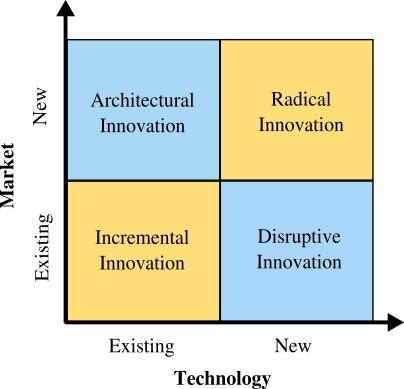
Ranking AttributeThis attribute evaluates a company's ability to innovate across four types: architectural, incremental, disruptive, and radical innovation. Companies are judged on how effectively they apply new or existing technology to improve products, services, and processes.
Community Responsibility
Ranking AttributeThis attribute measures a company's social responsibility and its obligation to act in society's best interests. It encompasses four pillars: philanthropy, labor practices, environmental conservation, and volunteerism.
Wise Use of Company Assets
Ranking AttributeThis attribute evaluates how effectively a company manages and tracks its assets. It includes maintaining accurate inventories, using asset management software, and ensuring proper maintenance and depreciation tracking.
Effectiveness in Running a Global Business
Ranking AttributeThis attribute assesses a company's ability to produce desired results on a global scale. A company is considered effective when its business plans yield the intended outcomes across international markets.
Value as a Long-Term Investment
Ranking AttributeThis attribute measures the degree to which a company creates long-term financial, social, and environmental value. Companies are evaluated on their ability to sustain an economically viable model over time.
Soundness of Financial Position
Ranking AttributeThis attribute evaluates the financial wellbeing of a company as measured by cash-flow statements, profit and loss statements, and balance sheets. A financially sound company demonstrates stability and responsible fiscal management.
Ability to Attract and Retain Talent
Ranking AttributeThis attribute assesses how well a company identifies and recruits top talent while keeping existing employees engaged. Companies are judged on their mission clarity, values, and people-focused practices.
The world’s most admired companies based on a nine-point ranking system
- Fortune Magazine has another well-respected, powerful list: Fortune’s World’s Most Admired Companies.
- The peer-judged list is scored and determined by business insiders within each industry.
- List candidates are rated based on nine key attributes running the gamut of business performance indicators.
- How a company is ranked is a factor that affects its online reputation.
You’ve heard of the Fortune 500, the well-respected ranking of America’s largest companies, but you might not be aware of another annual list the magazine produces; the World’s Most Admired Companies. This list explores corporate reputation and ranks the admirability of global companies based on key attributes as perceived by a large audience of qualified professionals.
This list of outstanding corporate reputation and performance is the World’s Most Admired Companies.
Who is Fortune?
Fortune was founded in 1929 by Henry Robinson Luce, co-founder of Time magazine, as a magazine for the business elite. Initially, Luce’s business partner Briton Hadden was not in favor of the magazine, but when Hadden died suddenly, Luce moved forward with the publication.
“Fortune’s purpose is to reflect Industrial Life in ink and paper and word and picture as the finest skyscraper reflects it in stone and steel and architecture.“
– Fortune, Volume 1, Issue 1
At first, Luce intended to call the magazine “Power” and in the original prospectus, he wrote that Fortune would be designed for “wealthy and influential” readers and that the price would present “a barrier so high that only the reader both enthusiastic and well-to-do will vault it.” His approach to the targeting of this magazine seemed to be on-point for its content.
Get a Free Reputation Assessment
Find out what people see when they search for you online. No obligation — results in 24 hours.
Through the 20th century, the magazine expanded not only in circulation but in style, including graphs and photography by well-known artists including Ansel Adams and Margaret Bourke-White. The magazine also expanded its coverage to include corporate lifestyle and social issues.
In 2018, Fortune was sold for $150 million to Chatchaval Jiaravanon, a member of one of Asia’s wealthiest families whose combined net worth is over $36 billion.

The Cover of Fortune’s Prototype Issue
What makes a company most admired?
The World’s Most Admired Companies list is different than the Fortune 500 in that the ranking isn’t based on size or revenue. The candidates for the list are chosen based on their revenue, and then the ranking is determined by the perception of nine specific attributes.
Instead of generating a corporate reputation score based on the perception of the general public, these attributes are judged by a large, but select, panel of professional peers who generate insight into how well the company is managing itself.
How are Fortune companies ranked?
The list of candidates starts with the top 1,000 U.S. companies with the highest revenue and non-U.S. companies from Fortune’s Global 500 that have revenue of at least $10 billion.
This list is then narrowed down to the companies with the highest revenue in each industry, leaving a total of 680. These businesses are evaluated by their peers within each industry. Evaluators provide a numeric value for each of the nine attributes, with one being the best possible score. A company must rank in the top half of its industry to be listed.
Who decides the ranking?
Korn Ferry, a global management consulting firm, collaborates with Fortune to provide the research needed to create the World’s Most Admired Companies list. Korn Ferry has conducted and provided the research for this list for 23 years.
The network that weighs in on the Most Admired list is made up of board directors, executives, and analysts who watch these high-revenue companies daily. These 3,770 business insiders have an active interest in the relevant markets, qualifying them to rate enterprises in their industries on the selected criteria.
Now let’s take a closer look at the nine key attributes used to rank companies for the World’s Most Admired Companies list.
Nine key attributes
- Quality of Management and Leadership
- Quality of Products and Services
- Innovativeness
- Community Responsibility
- Wise Use of Company Assets
- Effectiveness in Running a Global Business
- Value as a Long-Term Investment
- Soundness of Financial Position
- Ability to Attract and Retain Talent
What are the five leadership skills?
According to Northeastern University, there are five essential leadership skills that define strong leadership within a company. Those skills are:
- Self-development
- Team development
- Strategic thinking and acting
- Ethical practice and civic-mindedness
- Innovation
What makes a product good quality?
Product/service quality is determined by whether the product solves a real problem, is user-friendly, is efficient, and becomes something that the user depends on.
What are the four types of innovation?
There are four common types of innovation that businesses utilize to improve their products, services, and processes:
- Architectural innovation is when existing technology is applied in new markets.
- Incremental innovation is when existing technology is used to increase value to the customer in existing markets.
- Disruptive or stealth innovation is when new technology is implemented in existing markets.
- Radical innovation is when new technology is applied to new markets (this is the definition most people think of when they think of innovation).
What is social responsibility in a community?
Social responsibility is the obligation companies have to act in a way that serves society’s best interests. In a community, the responsibility of the company is to act in a way that is beneficial, or at least not detrimental, to the community.
Social responsibility is a broad term for different types of humanitarian action. The four pillars of corporate social responsibility are:
- Philanthropy: The effort using strategic gifts to help people solve long-term problems.
- Labor: The treatment, diversity, and satisfaction of your workforce.
- Environmental conservation: An in-depth analysis of your environmental footprint and your reduction efforts that exceed governmental regulations (after all, no one is going to pat you on the back for obeying the law).
- Volunteerism: The donation of time and talent to create a direct and immediate impact.
How can a company manage its assets and measure effectiveness?
Keeping an accurate inventory of assets is essential, including keeping track of type, location, and person responsible for each asset.
Using asset management software as opposed to simple spreadsheets can help reduce human error in inventory and valuation. The software can help schedule maintenance, calculate depreciation, and report on assets. Asset management hardware like tags and barcodes helps identify assets, which is crucial when dealing with a large inventory track. New assets should be added to the system immediately.
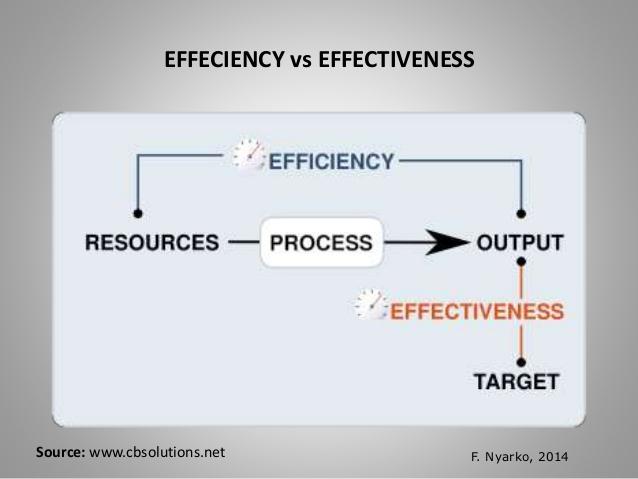
What is the concept of effectiveness?
A company’s effectiveness is its ability to produce the desired results or output. When a business plan has the intended results, the company is considered effective. For this list, Fortune considers effectiveness on a global scale.
What is long-term value creation?
Companies should impleme
Frequently Asked Questions









Protect Your Online Reputation
Every day you wait, negative content gets stronger. Talk to our experts about a custom strategy for your situation.
Get Your Free Analysis