
Local Business Reputation Management Overview
Discover how reviews, search algorithms, and local SEO work together to make or break your small business reputation.

Reputation matters, whether you’re an ordinary individual, an extraordinary individual, a crook, a saint, a political figure, or an entertainer. But reputation matters for more than just individuals. In the world of business, reputation has an ever broader impact than ever.
Local business reputation is one of the hottest and most active areas of reputation management. It is not an overstatement to say that a business’s success or failure depends on its reputation.
But how does a local business…
- Create a reputation?
- Ruin a reputation?
- Keep a reputation?
- Change their reputation?
This is where it gets interesting for local businesses. Reputation is notoriously difficult to change. Why? Because reputation is more than an amalgam of actions and deeds. Reputation is about how people perceive something. Reputation is the province of the mind. And it’s very difficult to change people’s minds.
Technology, however, has partially removed reputation from the realm of perception and into the world of algorithm. Because of this shift, managing a small business reputation has become more of a science than an art.
This article explains how local business reputation management works and how to effectively manage it for the improvement of your local business.
Localized SEO and Local Business Reputation
Reviews are important — we will discuss those shortly — but solid SEO is also important. If you’re a chiropractor (or any other local service provider), you will want a site highly optimized for terms like “best chiropractor.” Adding a geographic term earns more visibility from Google. For example, if your chiropractic office is in Ventura, California, you’ll want to optimize for a long-tail term like “best chiropractor in Ventura.” That means following basic SEO strategy to get your site optimized for terms that matter. After that is done, you can move on to reviews.
Local Business Reputation Management Is All About Online Reviews
A small business’s reputation exists in the form of online reviews. That sounds simplistic, but it’s true.
According to BrightLocal’s 2023 Local Consumer Review Survey, 98% of consumers used the internet to find information about local businesses in the past year. When they do so, they inevitably see reviews. These reviews are responsible for forming that consumer’s perception of the company.
of consumers used the internet to find information about local businesses in the past year
BrightLocal 2023 Local Consumer Review Survey
Take, for example, a simple query for “local furniture stores.” When searching, Google’s local pack appears with star ratings — an average of the star reviews left by previous customers.
Get a Free Reputation Assessment
Find out what people see when they search for you online. No obligation — results in 24 hours.
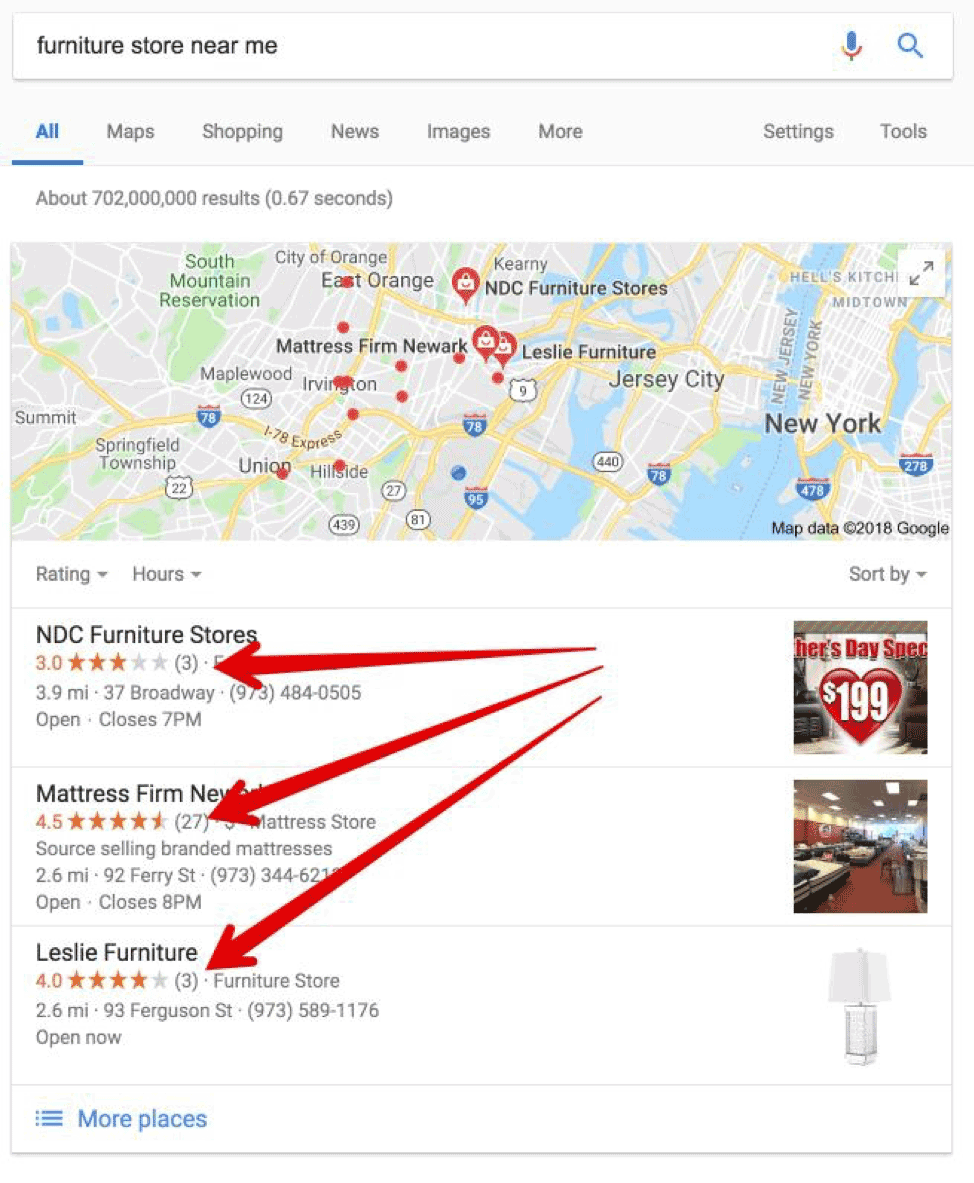
Not only are these reviews highly visible, but they are also trusted. Trust and reputation go hand in hand. According to BrightLocal’s 2023 Local Consumer Review Survey, 46% of consumers trust online reviews as much as a personal recommendation from a friend or family member (source).
The influence of those reviews on purchasing decisions is significant. BrightLocal reports that 87% of consumers read online reviews for local businesses. According to Power Reviews, 99.75% of consumers read reviews when shopping online at least some of the time.
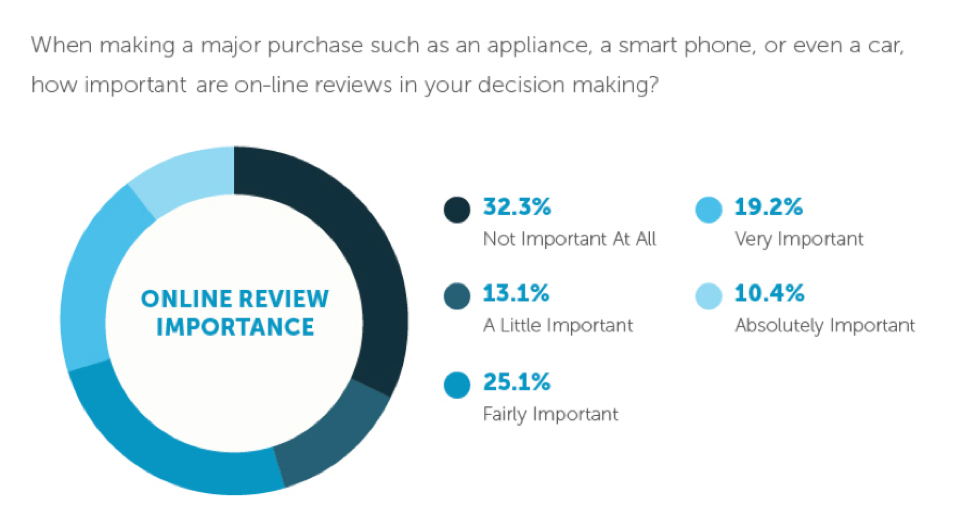
The better the reviews, the better the business’s reputation. By all signs, businesses with great reviews outperform businesses with poor reviews.
Google has made it easy for consumers. All they have to do is type in a business name, and they get instant visibility into that business’s reputation in the form of star reviews.
What Customers See on the SERP Forms the Business’s Reputation
The way local business reputation works is straightforward. A customer types in a query. What they see in the resulting search engine results page (SERP) shapes their perception of that company.
According to research from Moz, a single negative review on the first page of results can cost a business 21.9% of its customers. More recent data from ReviewTrackers reinforces the stakes — 94% of consumers say a negative review has convinced them to avoid a business entirely. The impact compounds with each additional negative result:
- A business loses 21.9% of its customers with one negative article on the first page of search results
- A business loses 44% of its customers with two negative articles on the first page of search results
- A business loses 59% of its customers with three negative articles on the first page of search results
- A business loses 69% of its customers with four negative articles on the first page of search results
- A business loses 99.9% of its customers with five negative articles on the first page of search results
Local business reputation is built on online reviews. When a customer searches a local business name, everything they see in the SERPs contributes to forming that business’s reputation.
Keep in mind that every type of local business can and does get reviewed — restaurants, plumbers, banks, insurance agencies, realtors, physicians. If you are a local business, you will get reviewed, and you will prosper or flounder based on what those reviews say.
Your online reviews are your reputation. To understand how this connects to broader brand health, see our overview of how reputation affects business success.
Which Review Sites Matter Most?
The next logical question most businesses ask is: which review sites are the most important?
There are several layers to the answer. The most straightforward, however, is Google.
Google Business Profile is the preeminent review platform and the most important one for shaping your local business reputation.
The Most Visible Review Site Is the Most Important
Reputation is closely tied to search engine visibility. What a customer sees first is the most influential piece of information in their formulation of a reputation.
In psychology, this phenomenon is known as anchoring — the tendency of the mind to rely on the first piece of information presented to it. This bias is just as meaningful in a reputation scenario as it is in a sales context.
What a customer sees first is what they think. And what they see first is usually Google’s review. Take, for example, the query “great shrimp nearby.”
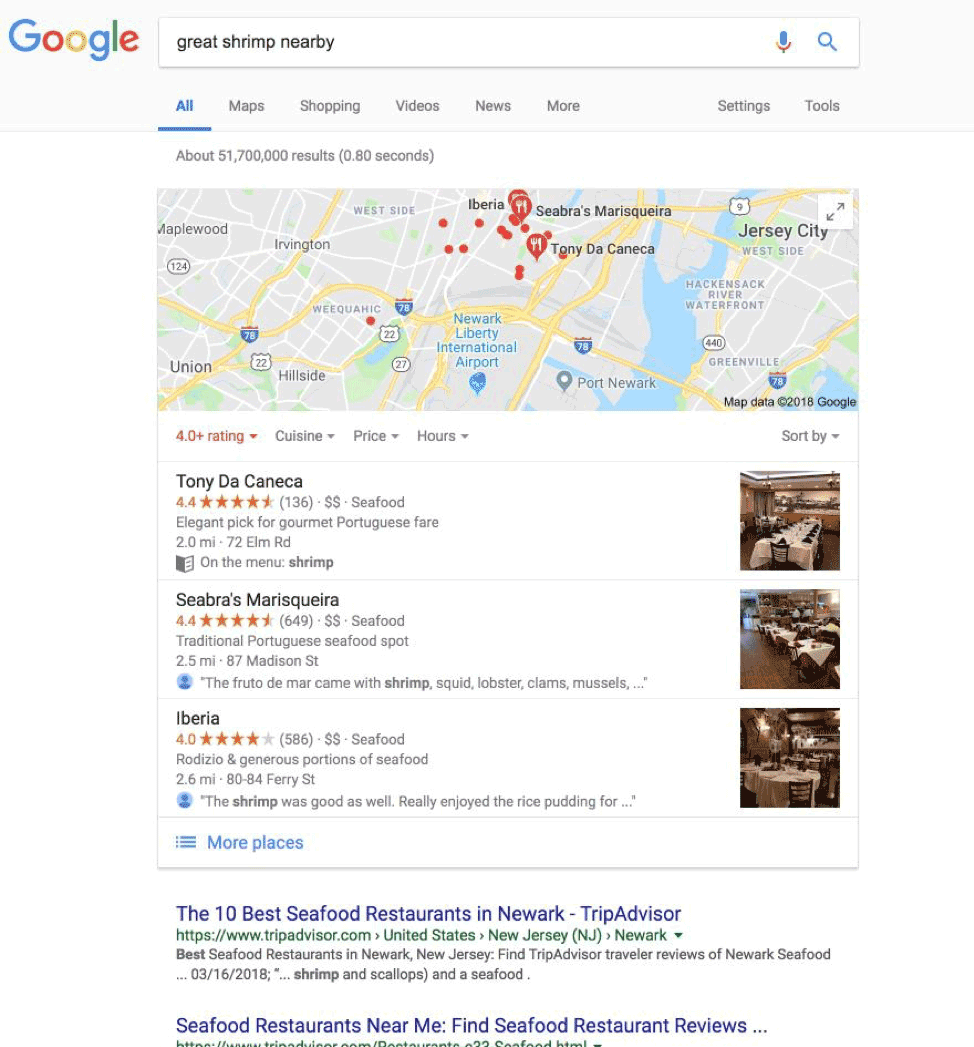
On a standard laptop screen, roughly 90% of the visible space above the fold displays Google reviews. On mobile, all of the visible screen space is Google reviews.

There’s another reason why Google is so important: maps. Google Maps remains the dominant map app for a large share of smartphone users, even as Apple Maps has made significant strides among iPhone users. Many consumers rely on Google Maps — not just Google Search — to find and evaluate a business.

The cognitive bias of anchoring, combined with Google’s visual domination of the SERPs, means your business’s reputation depends heavily on what consumers see in a Google query.
The Most Trusted and Most Relevant Review Sites Also Matter
The most visible review site is clearly the most influential, but trust also plays a significant role.
According to BrightLocal’s 2023 Local Consumer Review Survey, Google has emerged as the most used and trusted review platform, with 87% of consumers turning to it to evaluate local businesses. The current ranking of most trusted review sites, from highest to lowest, is:
- Yelp
- Better Business Bureau
However, the world of online reviews is overrun with fake reviews. A Harvard Business School working paper revealed financial motivations for local businesses to publish fake Yelp reviews, asserting that “the credibility of these reviews is fundamentally undermined.” The problem has grown more serious since then. The FTC took significant action in 2022 and 2023, culminating in a final rule issued in August 2024 that explicitly bans fake reviews and testimonials, with financial penalties for violations.
Most savvy consumers suspect that many online reviews are fake. According to BrightLocal’s 2023 survey, 62% of consumers say they have read a fake review in the last year — and a troubling share admit they can’t always spot them.
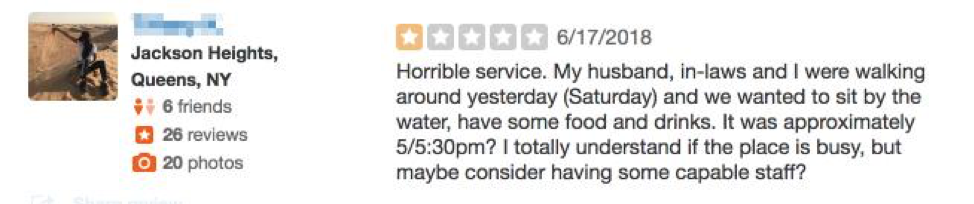
Despite the proliferation of fake reviews, consumers still rely on them. Without many alternatives, we remain dependent on review sites — fake reviews and all.
Beyond trust, relevance also matters. The more relevant a review site is to a specific type of business, the more trustworthy it tends to be. Zomato and OpenTable focus on restaurants. Glassdoor serves prospective employees. TripAdvisor is the leading review site for tourist destinations.
It’s important to determine which review site matters most for your particular local business and focus your reputation management efforts there. For a broader look at the landscape, see our guide to 20 business review sites to manage online reputation.
Is Your Local Business Reputation Working For You?
Our team helps local businesses build, protect, and recover their online reputation through proven review management and SEO strategies.
How to Improve Your Local Business Reviews
Once you recognize that your online reviews are your reputation — and that specific review sites carry more weight than others — the real work of reputation management begins. Creating a great business reputation requires earning great reviews.
Getting reviews for your local business is a multi-million dollar industry. It’s easy to get overwhelmed by the purported complexity of the task. The process, however, is quite simple.
To solicit positive reviews, follow this framework:
- Create a stellar experience. The most important thing a local business can do is refine and improve its craft. The better job a business does, the better reviews it is likely to earn.
- Ask for reviews. BrightLocal’s research consistently shows that consumers are willing to leave a review when asked. If you’re bold enough to request one, you’re likely serving customers in a manner worthy of a positive response (source).
- Respond to reviews. According to BrightLocal’s 2023 survey, 88% of consumers say they would be more likely to use a business that responds to all of its reviews — making responsiveness one of the most powerful trust signals available to local businesses (source).
- Make your business easy to find online. Increasing your business’s overall visibility is one of the simplest ways to generate more reviews. If customers can’t find you, they won’t review you. Strong local SEO and complete profiles on Google, Yelp, and Facebook give you a powerful edge in building a library of positive reviews.
How to Improve a Damaged Local Business Reputation
Often, clients come to us when the damage has already been done — when their local business has accumulated hundreds of negative reviews and little hope of recovery.
Rebuilding your reputation requires improving your reviews. There are two important principles to keep in mind.
- Improving a damaged local business reputation takes time. Reversing the trend of many negative reviews is measured in months, not weeks. Rolling out a review improvement program should be done at a controlled pace so that algorithms recognize the new positive influx as legitimate and trustworthy.
- Don’t be tempted to buy fake reviews. Attempting to reverse negative reviews by purchasing fake positives will most likely backfire. Review platforms are designed to detect artificial patterns — a sudden influx of positives after a stretch of negatives is a red flag the algorithm is built to catch. Beyond platform penalties, the FTC’s 2024 final rule makes buying or selling fake reviews a federal regulatory violation subject to financial penalties. The risk is simply not worth it.
A reliable method for building more positive reviews to counterbalance a large number of negative ones involves the following steps:
- Take whatever mailing list you have available.
- Depending on the size of the list, break it into several manageable segments. If possible, start with customers who have made purchases most recently.
- Send an email asking customers to share feedback about their experience with your business.
- For customers who respond positively, provide a direct link to your Google Business Profile review page and encourage them to share their experience publicly.
- For customers who express concerns, provide a dedicated channel — such as an online contact form — to reach your team directly so you can address their issues. Note that all review solicitation should comply with Google’s and Yelp’s platform policies, which prohibit steering customers toward or away from leaving reviews based on anticipated sentiment.
Based on our experience, approximately 10% of your mailing list will leave a positive review if asked. Solicit your list at a controlled pace to avoid triggering platform algorithms. For a deeper look at what happens when reputation damage goes unaddressed, see our guide to online reputation repair for damaged companies.
Conclusion
Your business’s reputation is constantly evolving. With every new review and star rating, your business gains a fresh nuance in the eyes of potential customers. Local business reputation management isn’t just about soliciting positive reviews and suppressing the negative. It’s also about listening to what your customers are saying and responding accordingly.
Treat your local business reputation as a core feature of your marketing strategy, because it is. As your ratings improve, your bottom line will improve as well. For a broader strategic framework, explore our complete guide to online reputation management.
Frequently Asked Questions








Protect Your Online Reputation
Every day you wait, negative content gets stronger. Talk to our experts about a custom strategy for your situation.
Get Your Free Analysis