
People Also Search For Behavior in Queries About Individuals
Google's People Also Search For feature connects individuals based on search patterns, relationships, and trends — here's exactly how those connections are made.

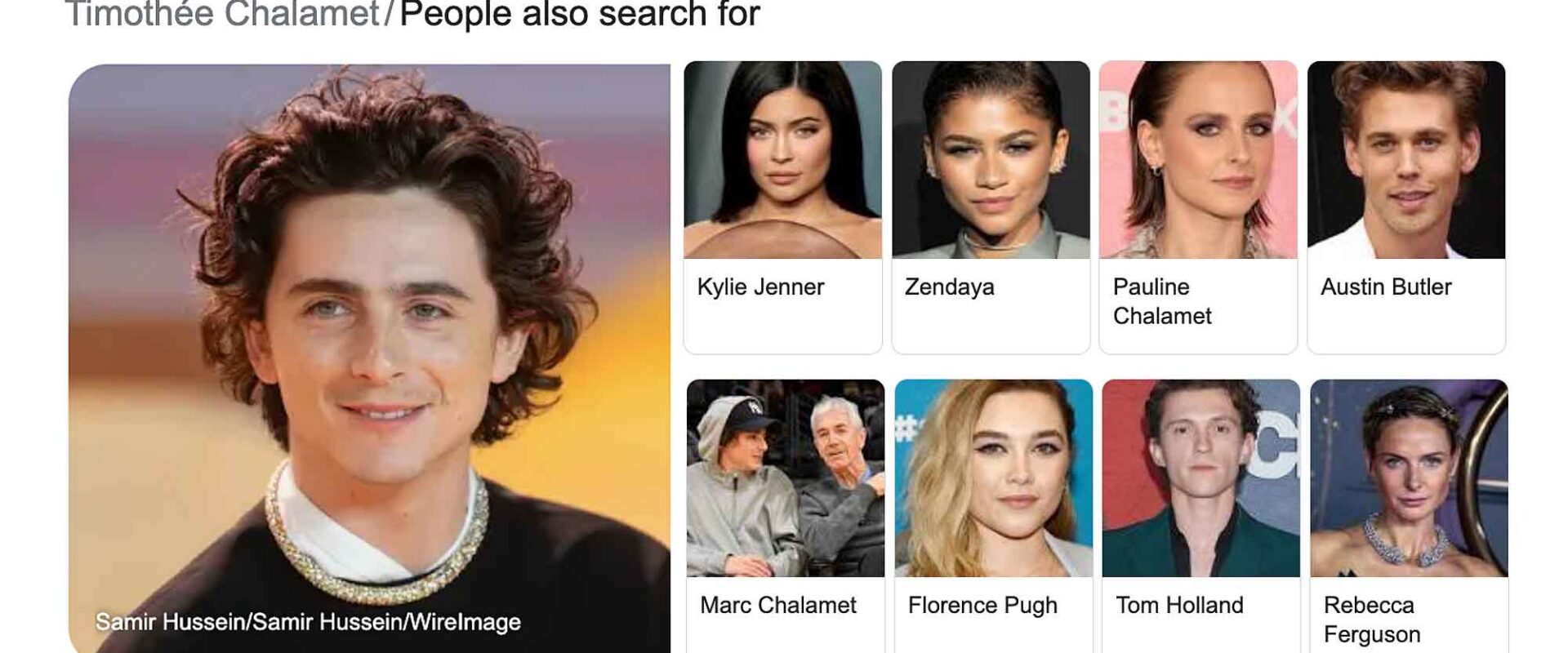
- PASF shows related people based on co-search behavior, shared context, and trending associations.
- Professional ties, news coverage, and public relationships all influence who appears together in PASF.
- Creating content that naturally mentions two people together can strengthen their PASF association.
- Editing Wikipedia articles to link two individuals can signal relevance to Google's algorithms.
- Joint media coverage and public appearances can trigger the trending factor that drives PASF groupings.
Google's 'People Also Search For' (PASF) feature surfaces related individuals based on shared search behavior, contextual relevance, relationships, and current trends. Unlike 'People Also Ask,' PASF reflects how often users search for two people together and how frequently they are mentioned in the same content. While influencing PASF associations is difficult due to Google's opaque algorithms, targeted content creation, SEO, and media coverage can increase the likelihood of specific individuals appearing together in PASF results.
“People Also Ask” and “People Also Search For” are different aspects of Google search results pages. In Google, “People Also Search For” shows related individuals based on common search behaviors, relationships, and relevance. It suggests other people frequently search alongside the queried individual, influenced by factors like professional connections, news trends, and public associations, helping users discover more related information.
Why Certain People Show Up in PASF
- Search Behavior:
- Google’s algorithms analyze search patterns and behavior to determine which individuals are commonly searched together. If many users who search for Person A also search for Person B, Person B is likely to show up in the (People Also Search For) PASF suggestions for Person A.
In the image above, Joe Biden is logically associated with Kamala Harris, Donald Trump, Barack Obama, and Jill Biden. It would not normally make sense for Timothee Chalmet to show up unless he and Joe Biden were frequently mentioned together online.
- Google’s algorithms analyze search patterns and behavior to determine which individuals are commonly searched together. If many users who search for Person A also search for Person B, Person B is likely to show up in the (People Also Search For) PASF suggestions for Person A.
- Relevance and Context:
- Google assesses the relevance and context of the search query. For example, if Person A and Person B are frequently mentioned together in news articles, web pages, or social media, they are more likely to appear in PASF for each other. In the example above, it is clear that the four people portrayed are mentioned together often.
- Associations and Relationships:
- The nature of the relationship between individuals plays a role, too. This could include professional connections, familial ties, co-starring in movies, collaboration in projects, or being involved in the same events or controversies. In the example above, they are all related by their association to politics.
- Popularity and Current Trends:
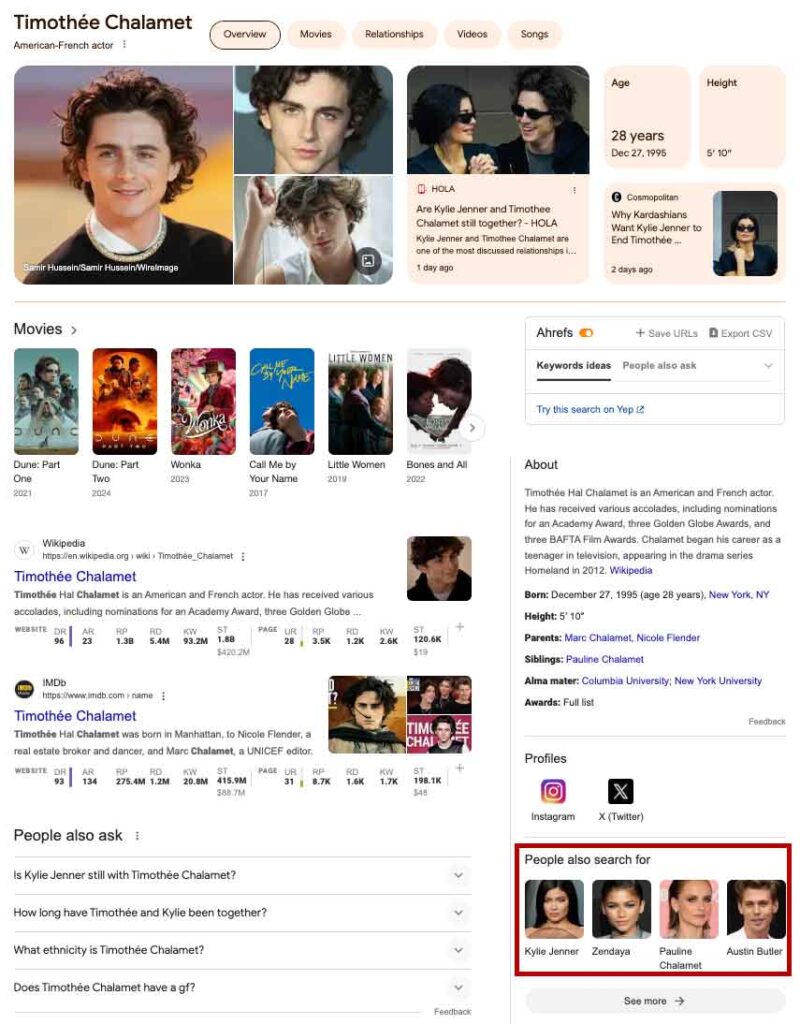
- Current trends and popularity can influence PASF results. If Person B is currently trending or in the news alongside Person A, this can increase the likelihood of Person B appearing in PASF for Person A. PASF can change based on trending topics. In the example below for Dune actor Timothée Chalamet, note that other actors like Zendaya (also from the movie Dune) also show up in the PASF section of the Google results page. This will most likely change when he does another big movie in the future.
Influencing PASF Results
Influencing who comes up in PASF for a particular person is very challenging, as it relies on Google’s black box algorithms and data-driven insights. However, there are some strategies that have a chance to increase the chances of certain individuals appearing in PASF together:
Get a Free Reputation Assessment
Find out what people see when they search for you online. No obligation — results in 24 hours.
- Content Creation and Linking:
- Create and promote content that associates the individuals you want to link. This can include blog posts, articles, videos, or social media posts where both individuals are mentioned together frequently. If the target person has a Wikipedia article, editing the Wikipedia article of person A to include the person you want to associate with (person B) in PASF results in the article can draw a line between the two people. Google may pick up on this strong association because the relevance between entities has been strengthened.
- SEO and Keywords:
- Optimize SEO strategies to include both individuals’ names in a way that they appear naturally together in high-quality content. This could mean writing articles that discuss both people, creating linked profiles, or using relevant keywords. If you have access to an organization that produces a lot of content for distribution, it may be possible to strategically mention ties between the two people. As a rule of thumb, the more famous the person, the more famous the person you want to associate with them should be.
- Media and Public Relations:
- Encourage media coverage that highlights the connection between the individuals. This could involve joint interviews, public appearances, or press releases that link the two people together. This can trigger the current trends aspect of PASF to form an association between the two people that is then showcased in Google search results.
- Engagement and Social Media:
- Foster social media engagement where both individuals are tagged, mentioned, or discussed together. This can increase the association between them in Google’s eyes. It is helpful if the persons have large social media followings as well because followers often click on articles or search for them. These searches can provide clues to Google regarding the relationship between the people. The system Google uses to understand clicks and time spent on a page is called NavBoost.
- Collaborations and Events:
- Promote or create collaborations, partnerships, or events that involve both individuals. Public events, joint projects, or appearances can strengthen the perceived relationship. This can be especially helpful if many journalists write stories and produce other content associated with both individuals simultaneously. The more online mentions of both individuals together, the better.
While there is no guaranteed way to influence Google’s PASF feature because of the complexity and closed nature of its algorithms, these strategies can help increase the association between individuals and potentially affect their appearance in related searches.
Frequently Asked Questions









Protect Your Online Reputation
Every day you wait, negative content gets stronger. Talk to our experts about a custom strategy for your situation.
Get Your Free Analysis