
Political Reputation Management
Political reputation is volatile, emotionally charged, and shaped by bias — here's what every candidate and public figure needs to understand before it's too late.


- Confirmation bias means voters filter political information through pre-existing beliefs, not objective facts.
- Ethical reputation strategies build long-term credibility; deceptive tactics tend to backfire badly.
- Small missteps in politics can escalate quickly, so proactive reputation management is essential.
- Political reputations are volatile and require both short-term damage control and long-term image building.
- Understanding your audience and the emotional drivers behind their support is critical to effective messaging.
Political reputation management is uniquely challenging because it operates within a landscape dominated by confirmation bias, where people seek out information that reinforces their existing beliefs. Effective political reputation management requires understanding that perception, emotion, and timing often matter more than facts alone. This article outlines core truths about how political reputations are built, damaged, and defended.
How to Manage Your Political Reputation
-
1
Account for confirmation bias in your strategy
Recognize that voters are more likely to seek out and remember information that confirms what they already believe about you or your opponent. Rather than trying to change minds wholesale, focus your messaging on reinforcing positive perceptions among your existing supporters. Understand that dramatic shifts in public opinion only occur when reality sharply contradicts what people expect, so consistency matters.
-
2
Anticipate deep opposition research
Assume that every deed, statement, or association from your past will be uncovered and scrutinized by opponents, journalists, or researchers. Conduct your own thorough background review before entering the political arena so you are not caught off guard by damaging revelations. Being proactive about past vulnerabilities allows you to craft a measured response before an issue becomes a crisis.
-
3
Treat small issues as potential crises
In political reputation management, minor incidents can rapidly escalate into national controversies that threaten an entire campaign. Take seemingly insignificant missteps seriously and address them quickly before they gain momentum on social media or in the press. A fast, transparent response to small problems demonstrates accountability and prevents them from defining your public image.
-
4
Prepare for rapid reputation volatility
Political reputations can rise and fall with extraordinary speed, so build a crisis response plan before you need one. Maintain a team capable of monitoring public sentiment and media coverage in real time. Having pre-approved messaging frameworks ready allows you to respond decisively rather than reactively when your reputation comes under sudden attack.
-
5
Lead with emotional resonance
Political reputation is shaped far more by how people feel about a candidate than by policy details alone. Craft communications that connect with the values, fears, and aspirations of your target audience on a human level. Voters who feel emotionally aligned with you are far more likely to overlook minor missteps and remain loyal supporters.
-
6
Time your reputation efforts strategically
Launching reputation-building or damage-control campaigns at the wrong moment can waste resources or even amplify negative attention. Align your messaging and public appearances with the news cycle and key electoral milestones to maximize impact. Long-term reputation building requires consistent effort, while short-term damage control demands swift, well-timed action.
-
7
Target the right audience with your messaging
Not every voter is persuadable, and spreading your reputation management efforts too broadly dilutes their effectiveness. Identify the specific segments of the electorate whose perceptions you most need to influence and tailor your communications directly to their concerns. Delivering the right message to the right audience at the right time is more effective than broad, generic outreach.
-
8
Leverage social networks deliberately
Political reputations spread rapidly through social networks, meaning both positive narratives and damaging stories can go viral within hours. Actively cultivate a presence on the platforms where your key audiences are most engaged, and encourage authentic sharing by supporters. Monitor social channels continuously so you can identify and respond to emerging reputation threats before they reach a wider audience.
It’s hard to change someone’s mind. However, it’s easy to confirm one’s biases. And nowhere is this more true than in the world of political reputation management.
Political reputation is an untamed beast, whether you’re running for the vice president of your neighborhood HOA or vying for election to the president of the United States. It’s complicated. It’s tenuous. It moves rapidly. It rises. It falls. And no one in the history of the world has absolutely mastered it.
Political reputation management refers to the strategies and actions taken by individuals, organizations, or public figures to shape and protect their public image and perception in the political arena.
Here are some key points to understand about political reputation management:
- A positive political reputation can enhance trust and credibility.
- It can help in winning elections, gaining public support, and advancing political agendas.
- Political reputation management should adhere to ethical standards to maintain credibility and trust.
- Misleading or deceptive tactics can backfire and damage one’s reputation further.
- Reputation management can involve both short-term damage control and long-term image building.
- Long-term strategies aim to establish a consistent and positive reputation over time.
- Ultimately, the success of political reputation management depends on how the public perceives and responds to the efforts made to shape a political image.
A political figure spent three months crafting a thorough search engine reversal — one in which he would push up negative information about his opponent.
What follows in this article is a let’s-sit-down-and-face-the-facts discussion of political reputation management. However, the nine truths about political reputation management that follow are all swallowed up under one broad truth.
This truth is called confirmation bias.
This article starts with a discussion of confirmation bias because this bias shapes the entire universe of politics.
Confirmation bias, whether we acknowledge it or not, influences all of our thinking — from how we approach the concept of deity, to how we handle money, and, yes, to the political stances we take.
We like to think that we are rational and unbiased beings, operating according to strict logical rules and in response to objective facts. But cognitive research over the past few decades has revealed that our minds aren’t quite as reliable as we think.
Let’s drop right into this issue, since it affects everyone, regardless of political preference.
1. Political reputation is heavily influenced by confirmation bias
As we have explained elsewhere, “Confirmation bias is our tendency to find, favor, and remember information that already confirms our existing beliefs.
In turn, it causes us to pay considerably less attention to that information that does not support what we already think that we know.”
Political reputation is less what politicians do and say, and more about what people want to see when they consider that politician.
How does confirmation bias affect politics? If you are a supporter of Party A, you will find, favor, and remember information that affirms you in your support of Party A. Your brain wants it to be this way.
If you encounter unpleasant facts about Party A, you will overlook it, forget it, deny it, or somehow sync the unpleasantness of those facts into your overall support of Party A. You will support Party A’s candidate, watch news networks that support Party A, and attend rallies sponsored by Party A. Your Facebook newsfeed probably has a daily influx of positive information regarding Party A.
This is how political reputations are formed and how they remain firmly implanted in the human psyche.
Get a Free Reputation Assessment
Find out what people see when they search for you online. No obligation — results in 24 hours.
Confirmation is such a powerful bias that we usually are not aware of how profoundly it’s affecting us.
Furthermore, we have little power over how dramatically it shapes our thinking process.
Do people change political affiliations and switch their support from Party A to Party B? Of course. But the occasions under which they do so concur with a dramatic disjunctive between what they expect and what is actually occurring. Thus, confirmation bias surfaces in the mind. The tension is brought to the surface of consciousness.
Only at that point does the mind, in its constant search for equilibrium, decide to adopt a new system of beliefs and principles that allow it to support a different party or candidate.
It sounds deep, but the principle itself is really quite simple.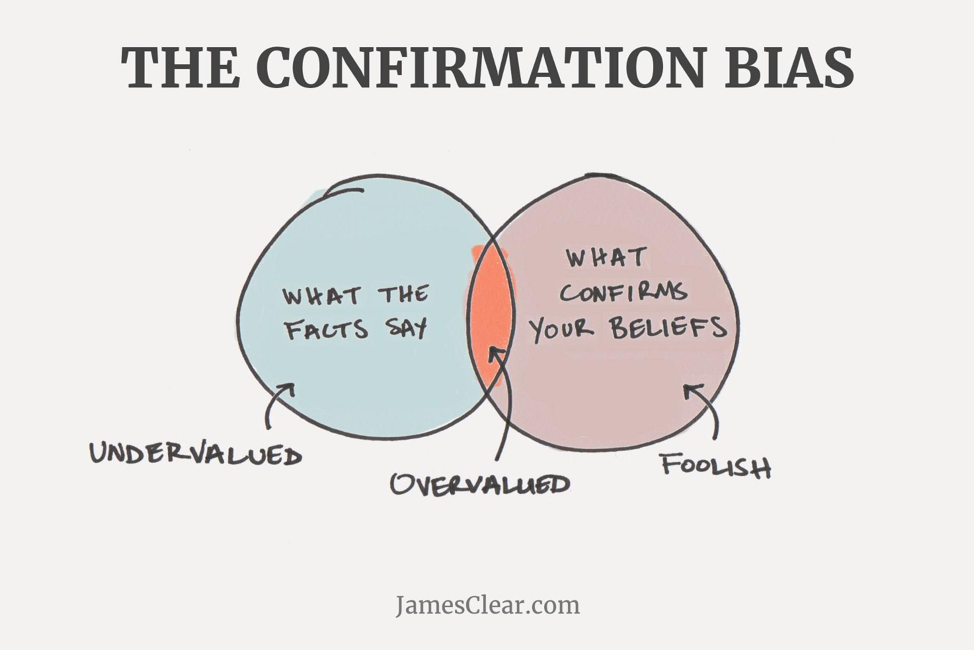
To oversimplify the issue, you will continue to believe what you already believe.
That, in a nutshell, is political reputation management. But in the rough and tumble world of politics and reputation, there’s a lot more going on.
2. Political reputation digs deep
There’s an old witticism that goes something like this. “If you want your genealogy traced for free, run for public office.” If you’ve been alive during any type of major election, you know this to be true. Every deed done (or imagined done) is on public display.
Researchers will uncover everything they possibly can on a candidate and either use this to besmirch or enhance that candidate’s reputation. It is precisely this reason that deeds committed offhandedly can spark a national conflagration and threaten to upend a candidate’s bid for the presidency.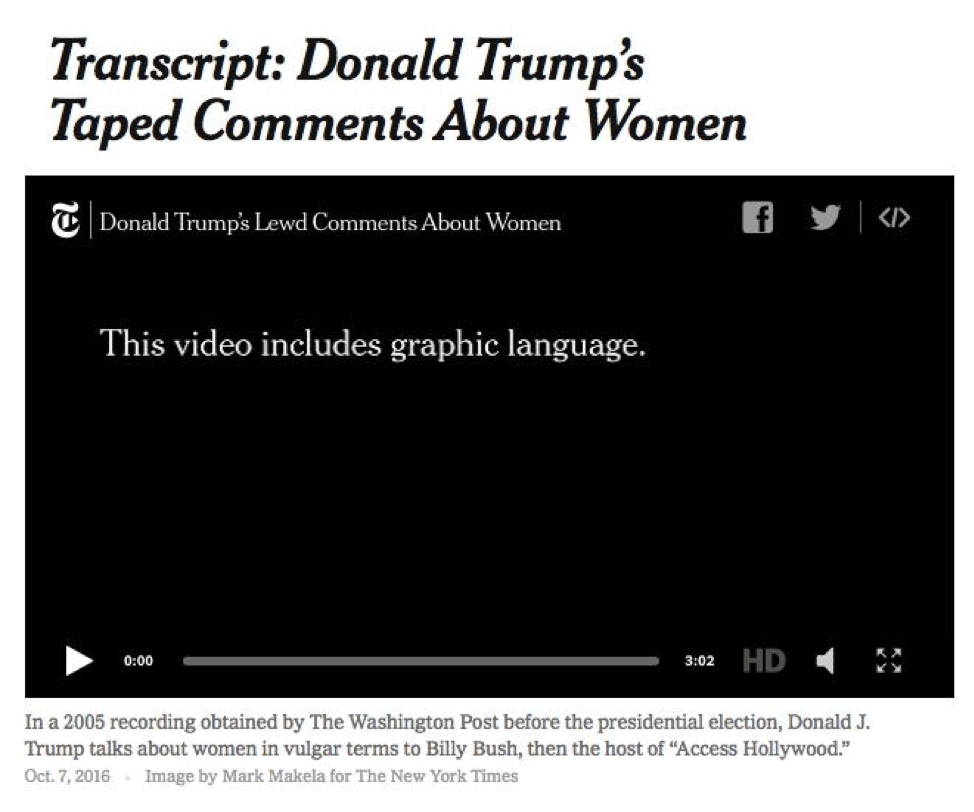
As the thinking goes, it is precisely this deep digging that tends to reveal an individual’s true character. Therefore, the deeper the research (or apparent conspiracy), the more it tends to shake a candidate’s reputation.
When rumors swirled regarding Barack Obama’s citizenship, many people latched onto the rumors as gospel truth, due in part to the alleged depth of the research. Even when the rumors were overturned by facts, people clung to the mistruths.
In politics, information that can be unearthed will be unearthed. Skeletons you thought were firmly ensconced within closet walls will egress.
3. In political reputation, seemingly small things become big things
Nothing is off limits in the world of political reputation. And, since the political candidate is often under such intense scrutiny, things that seem insignificant can turn into reputation-shaking issues.
They will talk about your arms.
They’ll even talk about your hands.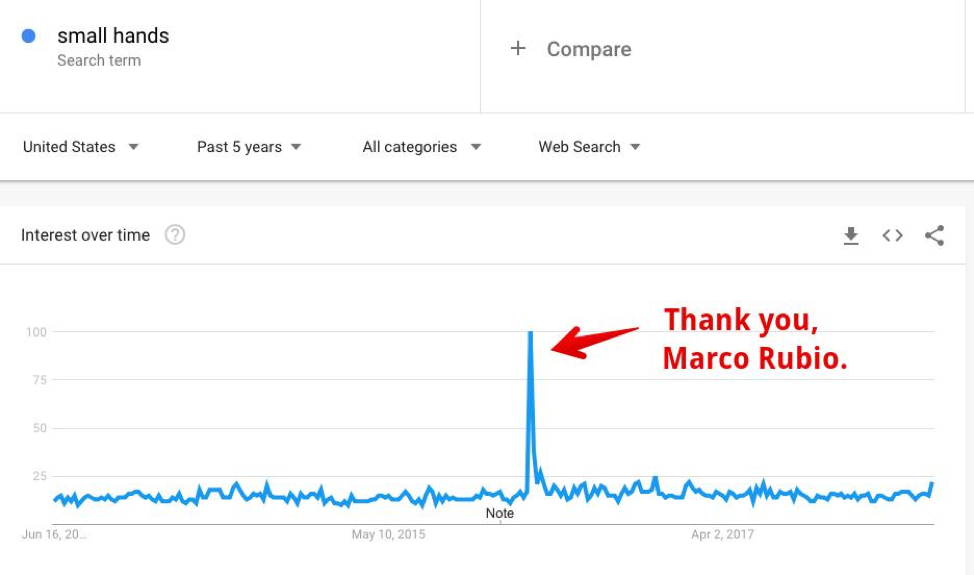
People possess full-time jobs that consist of the sole task of finding things that might negatively influence a politician’s reputation. And if they can’t find big things, they will find small things. And they will turn those small things into big things.
4. Political reputation is volatile
A candidate’s reputation may plummet and soar in fast succession, especially during an exciting election time. This undulation is reflected both in the search engine results pages (SERPs) and in social media feeds.
Timing is everything, and public relations agents will carefully prepare and release compromising information about a political opponent when they deem the time to be right.
Reporters, commentators, pundits, talking heads, and the general public respond to the release of information with an effusion of comments, shares, likes, retweets, and other social and search engine signals.
Algorithms respond by lifting this information to the top of the search engine results page, especially in the more flexible areas of the SERPs, such as the local knowledge panel, the news results, and other elements that Google displays around the organic results.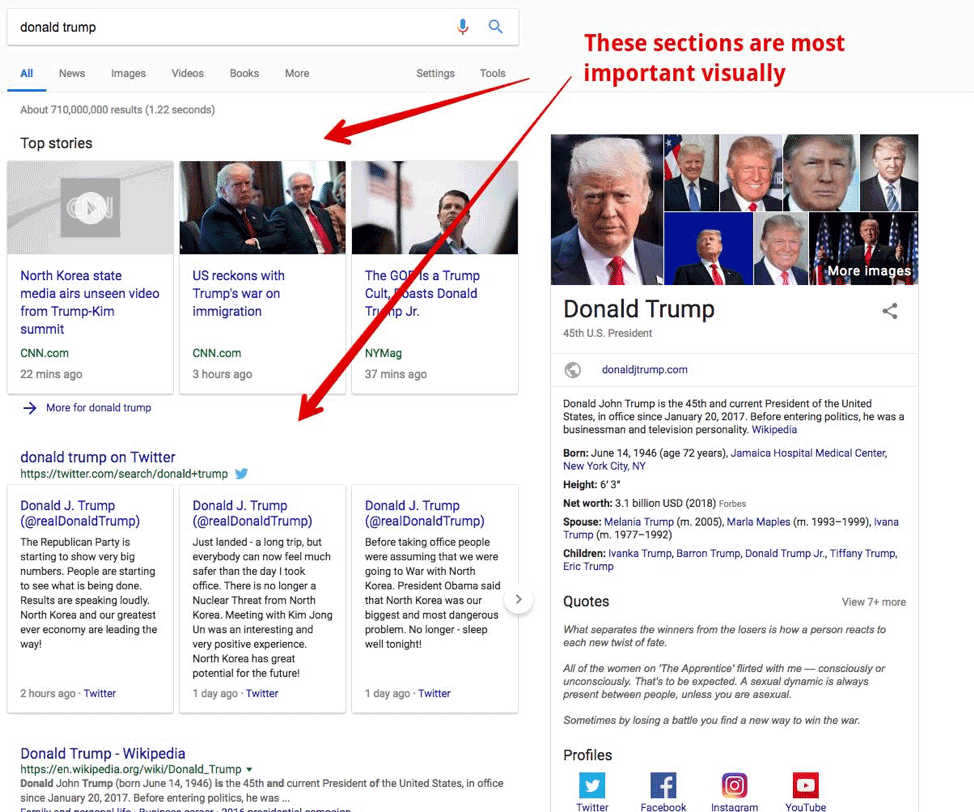
The reputation of political figures depends more on up-to-the-minute social media reporting and news stories than it does on historical methods of search engine optimization.
While traditional SEO certainly has a place in political reputation management, most people respond more quickly to the “top stories” that they see on Google or on the social media posts that are shared in their feeds.
5. Political reputation has everything to do with human emotion
Let’s throw another cognitive curveball into the mix of political reputation management. The most shareable bits of news are those that inspire strong emotional reactions.
For this reason, political PR agencies make every effort to invoke an emotion in the reader — one that will cause him or her to share the information or respond in a certain way.
According to research reported by the Smithsonian, anger is the most viral of all the emotions in that it travels the fastest. In a 2014 release, they made the following assertion:
Nothing is speedier than rage. The researchers found that users reacted most angrily—and quickly—to reports concerning “social problems and diplomatic issues”
This spark of anger causes a chain reaction.
In many cases, these flare-ups triggered a chain reaction of anger, with User A influencing Users B and C, and outward in a widening circle of hostility.
They quoted Jonah Berger, author and Wharton professor, who wrote,
Anger is a high-arousal emotion, which drives people to take action. It makes you feel fired up, which makes you more likely to pass things on.
Harvard Business Review points out another feature of shareable content that sheds light on the formation of a political reputation:
New research suggests arousal is just one of the underlying drivers of viral content. High dominance, or a feeling of being in control, may be another key driver behind content that is widely shared.
Emotional arousal plus feelings of dominance are undoubtedly strong features of any political discussion.
Have you ever felt a bit of anger over your odious uncle on Facebook because of his strident political comments? Or have you shared a story of power and triumph (supporting your political party, of course), because it made you feel like you were on the victorious or righteous side (a feeling of high dominance)?
This complex emotional interplay is a marked feature in political reputation management.
6. Political reputation takes timing
Although political reputation is fast-paced and ever-changing, doing it right takes a lot of thorough preparation. Eruptions in political news may seem arbitrary or by chance, but there is often a powerful PR machine behind the release. And that release is often carefully timed.
Because we are familiar with political reputation management, we’ve seen this play out in remarkable ways. In one situation, a political figure spent three months crafting a thorough search engine reversal — one in which he would push up negative information about his opponent and positive information about himself using SEO.
Although preparation took nearly a quarter of the year, the bomb dropped one week before the election. Left with only a week to respond, his opponent was helpless. How was it accomplished? A number of factors, as well as timing, contributed. One key factor was the creation of well-developed content that search engines would love.
The action was devastating for the opponent, not only because it revealed negative features that made him unsuitable for election, but also because he lacked time to respond.
Some reputation maneuvers may happen rapidly, but be short-lived. Others may require months of preparation and have a remarkable impact.
7. Political reputation should address the right audience
Political reputation does not occur independently of certain sources of publication. It’s no secret that different news sources cater to audiences of certain political persuasions. People even try to graph the political skew of these news networks.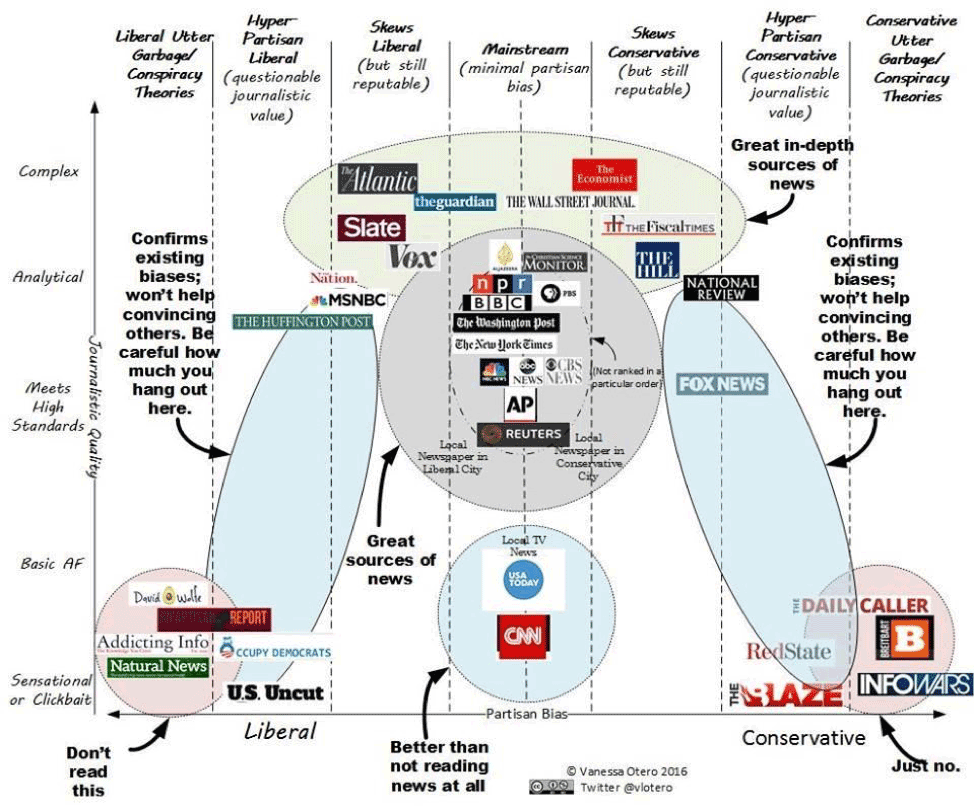
Depending on your political viewpoint, you may become upset at where the creator of this graph has placed an information network that you tend to enjoy. (See point five above.)
That’s why someone of a different political persuasion would graph news sources differently. In response to the above chart, for example, Infowars made the following graph.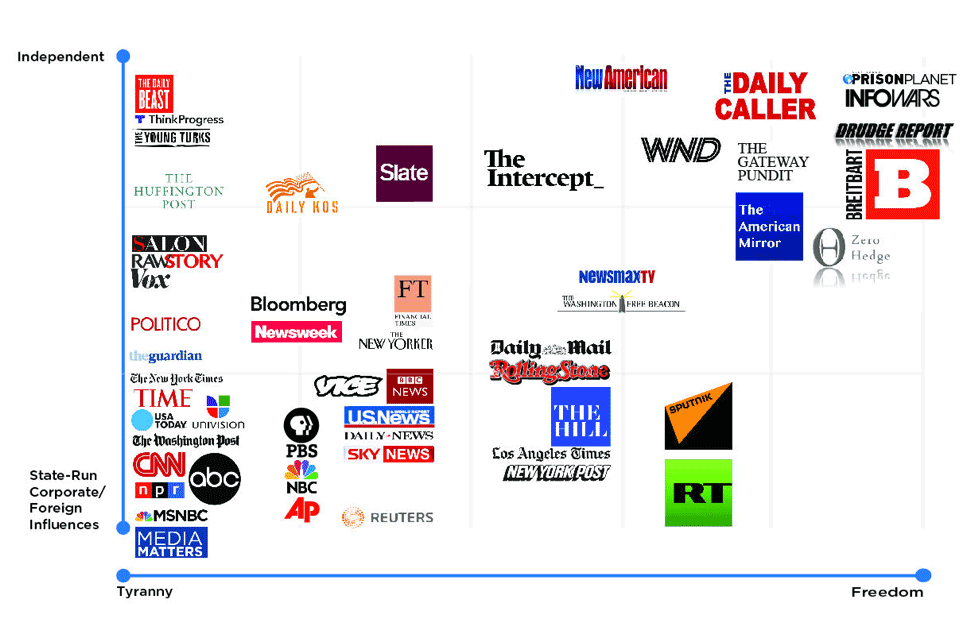
In keeping with the principle of confirmation bias (see point one above), people will choose publications that tend to affirm their beliefs.
Readers who tune into Alex Jones and Infowars probably did not vote for Barack Obama. Supporters of Hillary Clinton in the 2016 presidential election probably did not choose Fox News as their primary source of information.
When attempting to shape political reputation, you should choose the publications that most closely adhere to the political base you’re trying to appeal to.
8. Political reputation spreads through social networks
At the risk of overstating the issue, Facebook is omnipotent. People get their news from Facebook or some other social media network. It’s that simple.
Where did you hear about whatever big issue happened recently? While writing this article, a big recent story was the passing of Anthony Bourdain. Where did I get the news? On an Instagram story.
Only after I saw the Instagram story did I open up Safari and search for more information.
Facebook can confidently say, “You saw it here first.” Pew Research pointed to this trend in 2017 with their research that claimed “two-thirds of U.S. adults get news from social media.”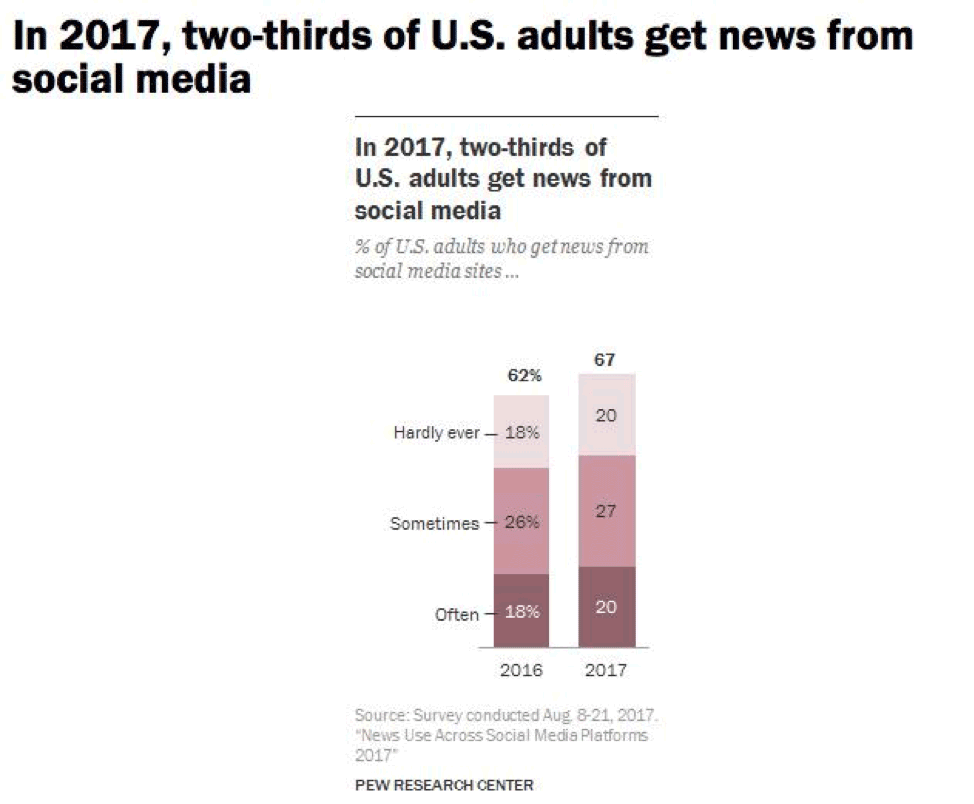
And even if a U.S. adult doesn’t “get news from social media,” they at least see it. You can’t scroll two inches on Facebook without seeing a share, a post, or an inferno over who’s right and who’s wrong about politics.
9. Political reputation has massive risk
What’s the riskiest arena of reputation management? Political reputation, obviously.
It’s probably not quite as risky as dramatizations make it out to be.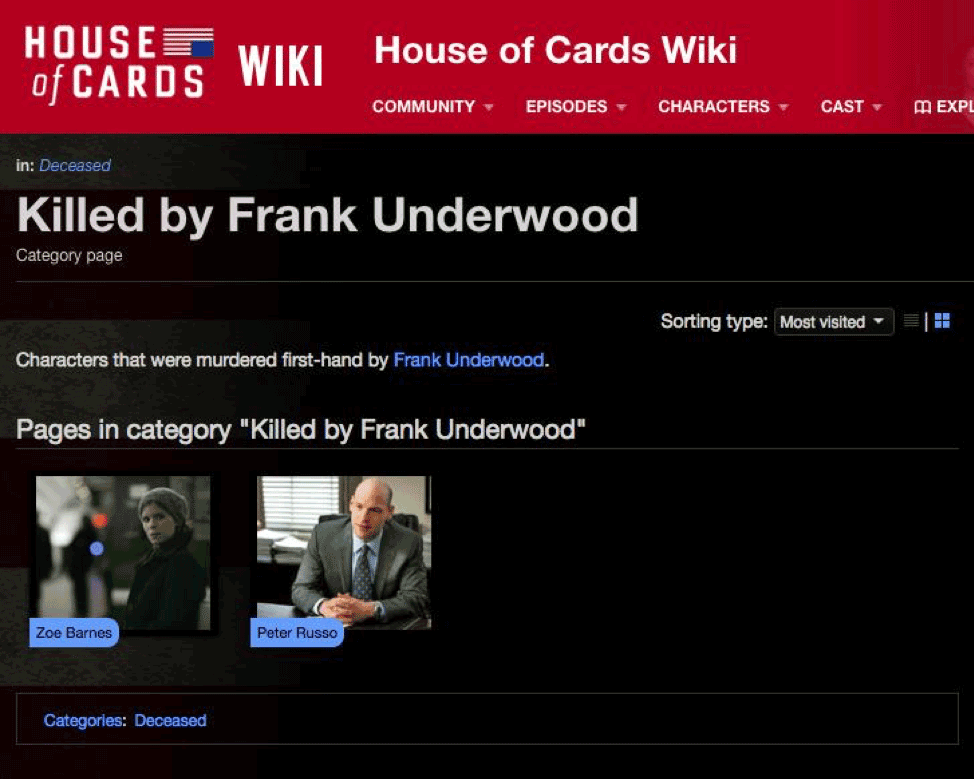
But there are some who think otherwise.
The real risk in political reputation is the damage that can be done to someone’s reputation when they screw up their management efforts.
This primarily happens in the practice of astroturfing. What is astroturfing? Astroturfing is what happens when people try to make it appear as if their policy, party, or candidate possesses grassroots support.
How do kingmakers and political PR firms practice astroturfing?
- It happens largely by unethical means.
- Sometimes, agencies will buy reviews, likes, avatars, false advertisements, or perform other methods to achieve astroturfing results.
One political party (not in the U.S.) bought dozens of highly visible political blogs in an effort to control the substance and nature of the content that was being published. They went on such a blog-buying spree that he eventually controlled an entire blog network.
Astroturfing can be hard to spot but is a common practice in political reputation management. Russians are quite good at it.
Conclusion
When it comes to political reputation management, it’s not enough just to shine your shoes, kiss some babies, and smile for the camera.
It’s a lot more complicated. Political reputation management is a thing. And it is effective. But one cannot definitively control an election, reverse policy, or change the course of world history through political reputation management alone.
Confirmation bias, the tendency to believe what you’ve always believed, is the most potent force in political reputation management. If you can change that, then you’re making some serious progress.
Frequently Asked Questions









Protect Your Online Reputation
Every day you wait, negative content gets stronger. Talk to our experts about a custom strategy for your situation.
Get Your Free Analysis